
'/%3E%3Cpath%20fill='%23b2b2b2'%20d='M241%20382q0%2016%2017%2026%2017%2011%2042%2011t42-11q16-11%2017-26V269H241'/%3E%3Cpath%20fill='%239f7e00'%20d='M241%20379q0%2014%208%2023%209%209%2021%209%2014%200%2021-9%209-9%209-23V269h-59'/%3E%3Cpath%20d='M241%20339v-70h59v110q0%2014-9%2023l-6%205v-68h-15v72q-8%200-14-4v-68zm59%2040c0%2022%2015%2032%2029%2032%2021%200%2030-18%2030-32v-40h-59'/%3E%3Cpath%20fill='%239f7e00'%20d='M266%20277v5h2v12h-3v-5h2v-5h-9v5h2v5h-4v9h3v18h-5v10h34v-10h-5v-18h3v-9h-4v-5h2v-5h-9v5h2v5h-3v-12h2v-5zm42%20101q0%2010%206%2017%206%206%2015%207%2010-1%2016-7%206-7%206-17v-29h-43'/%3E%3Ccircle%20fill='%230044ad'%20cx='329.5'%20cy='372'%20r='6'/%3E%3Cellipse%20fill='%230044ad'%20cx='300'%20cy='340'%20rx='16'%20ry='21'/%3E%3C/svg%3E)


Dilated cardiomyopathy (DCM) used to be a disease that was not well understood, and treatment options were limited. Today, medications, devices, transplantation, and advances in genetics give patients more ways to manage their condition and a reason for hope.
This timeline highlights key milestones in the evolving understanding and care of DCM, from medical breakthroughs to patient advocacy initiatives.
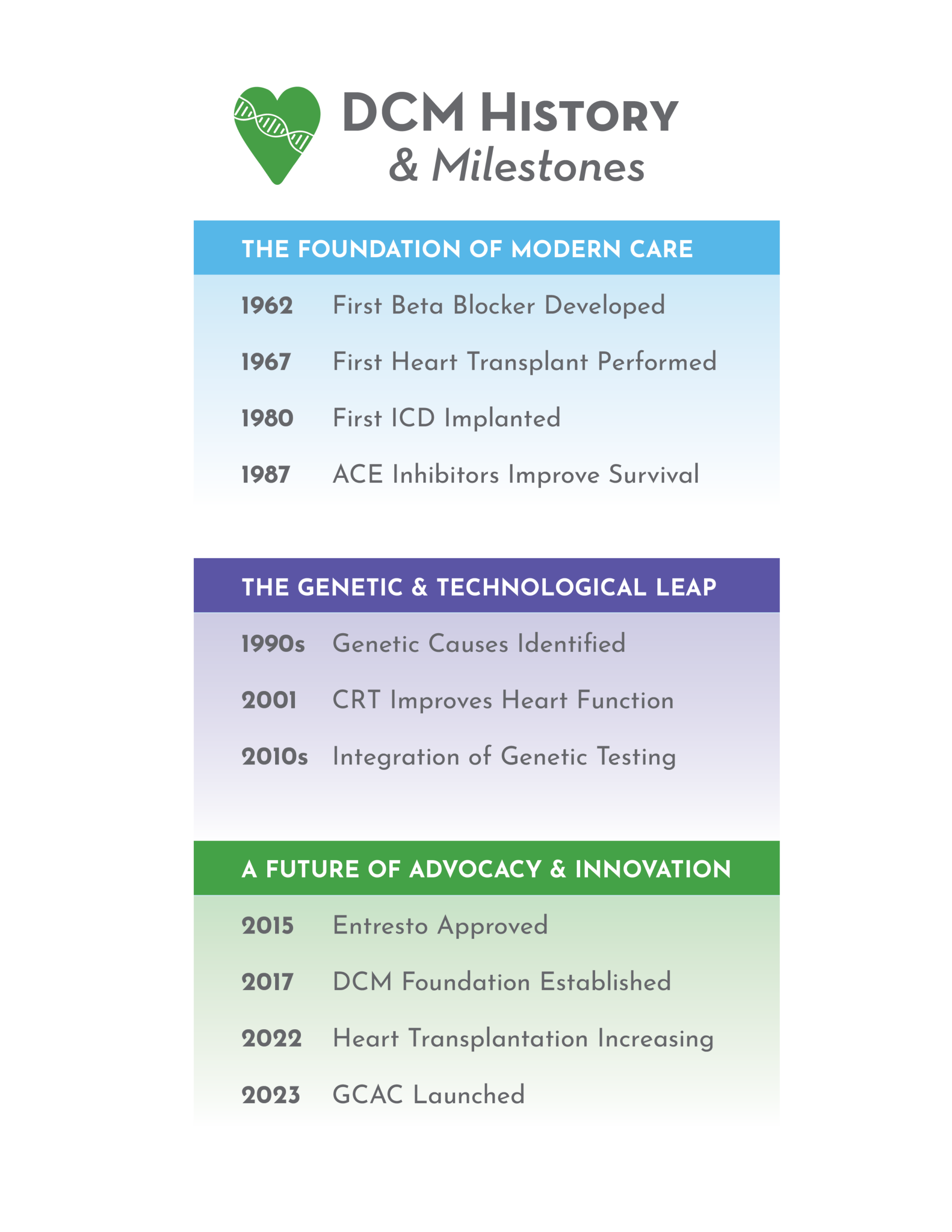
The Foundation of Modern Care
- 1962 | First Beta Blocker Synthesized: The creation of the first beta blocker lays the groundwork for what is now a cornerstone of heart failure treatment.
- 1967 | First Heart Transplant Performed: A landmark achievement in cardiac care, opening the door to life-saving options for advanced heart disease.
- 1980 | First ICD Implanted: The implantable cardioverter-defibrillator (ICD) is successfully used in a human, providing a literal safety net against life-threatening arrhythmias.
- 1987 | ACE Inhibitors Improve Survival: These become the first medications clinically shown to improve survival in heart failure, marking a major milestone in DCM management.
The Genetic & Technological Leap
- Mid-1990s | Genetic Causes Identified: Research officially establishes that DCM can be inherited, fundamentally changing how we screen families.
- 2001 | Cardiac Resynchronization Therapy (CRT): Biventricular pacemakers are shown to improve heart function and quality of life for many living with DCM.
- 2010s | Integration of Genetic Testing: Testing becomes more accessible, allowing families to understand their specific risks and plan care proactively.
A Future of Advocacy & Innovation
- 2015 | Entresto Approved: A new class of medication is introduced, significantly improving heart function and patient longevity.
- 2017 | DCM Foundation Established: A turning point for patient support, providing the education and advocacy needed to navigate the disease.
- 2022 | Transplantation Milestone: Over 43,000 heart transplants have now been performed in the U.S., reflecting massive advances in surgical expertise and organ donation.
- 2023 | GCAC Launched: The Genetic Cardiomyopathy Awareness Consortium brings together patient groups and partners to raise awareness about genetic testing and cardiomyopathy and to connect genetic researchers with genetic cardiomyopathy patients to advance research in the field.
Advanced Care Is Already Here
Since the 2000s, care for advanced DCM has transformed. Life-saving options such as heart transplantation and mechanical heart pumps (LVADs) are now well-established. These advanced care pathways have helped many patients live longer and experience a significantly improved quality of life.
A New Frontier: Genetic Research
Research into the genetic causes of DCM is rapidly expanding and helping guide the development of future gene-specific and precision therapies. Unlike traditional treatments that focus on managing symptoms, these emerging approaches aim to one day address the underlying causes of disease for people with genetic forms of DCM.
What This Means for Families Today
This momentum in DCM research means families have more treatment options than ever before:
- More Choices: Proven treatment options exist for every stage of the disease, from early medical management to advanced mechanical support if warranted.
- Better Answers: In some cases, genetic testing may help explain why DCM developed and identify relatives who may benefit from proactive screening and care.
- Growing Possibility: While DCM cannot yet be fully reversed, the move toward personalized, genetics-informed medicine brings meaningful and growing hope for the future.